May not display properly in FireFox 3. Please upgrade your browser.
Replay

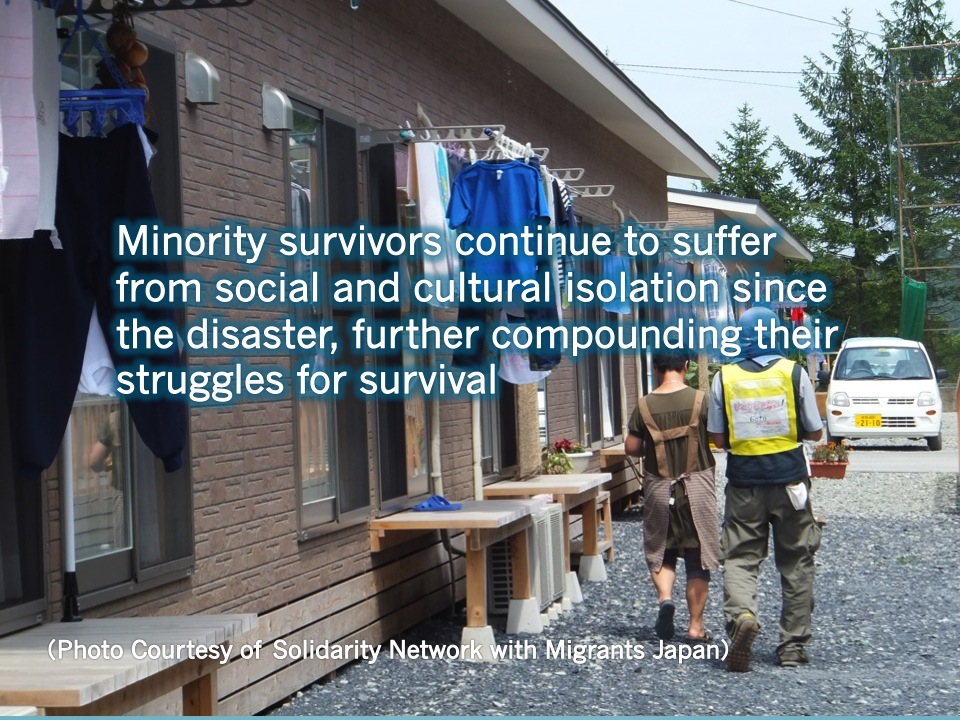
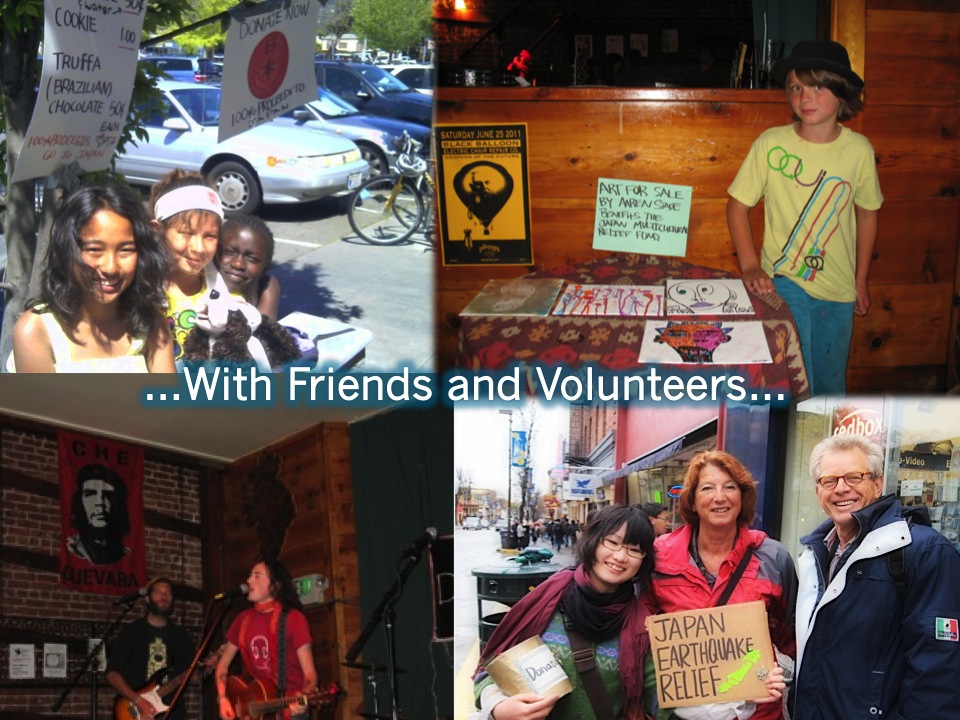
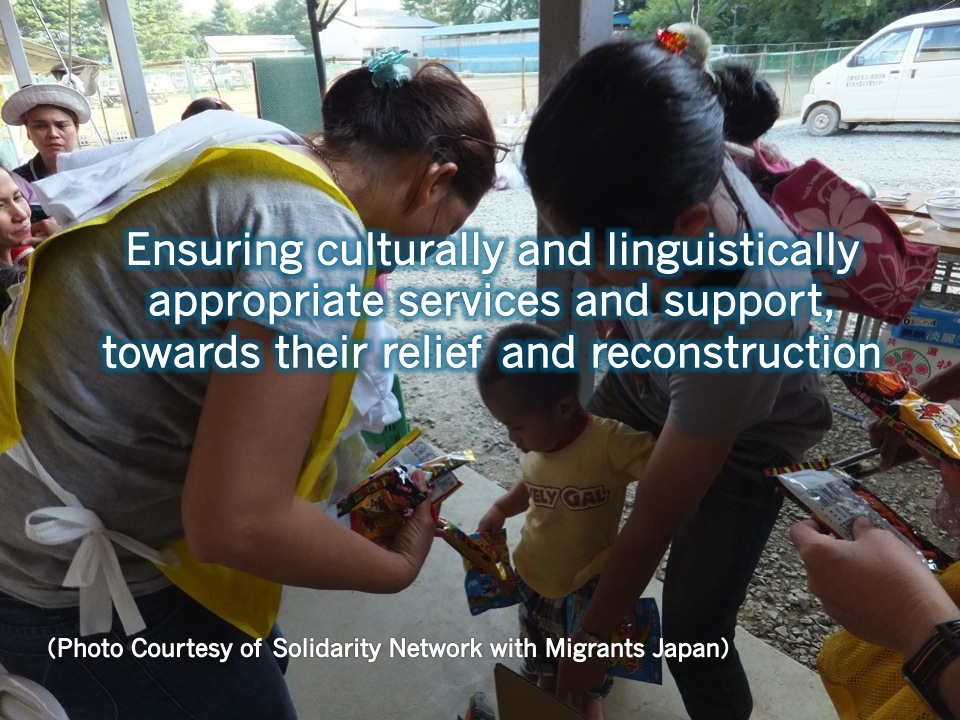
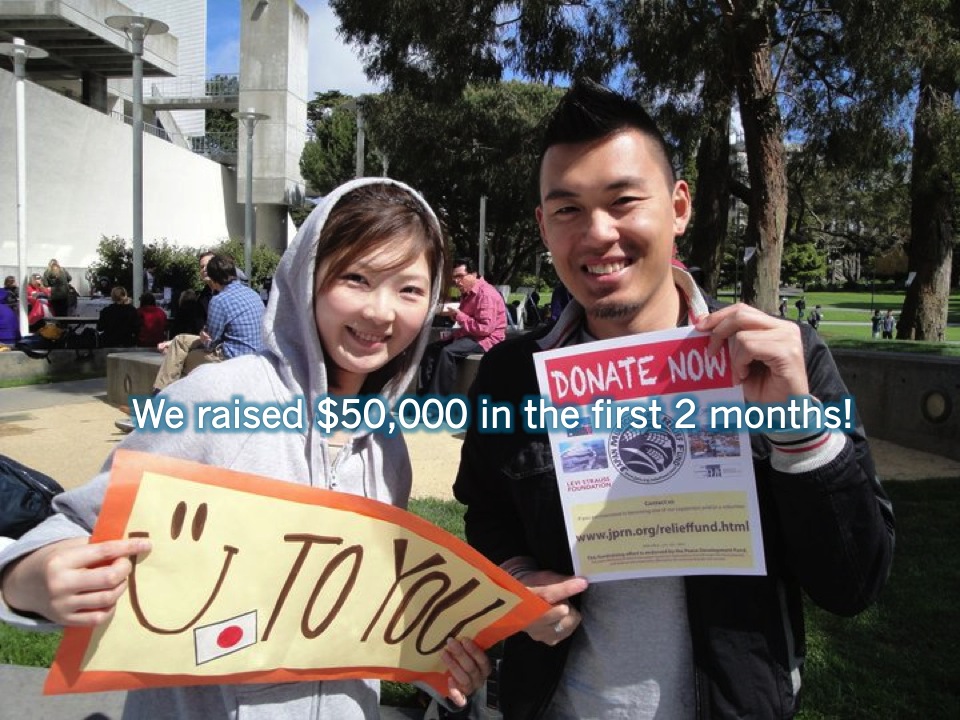
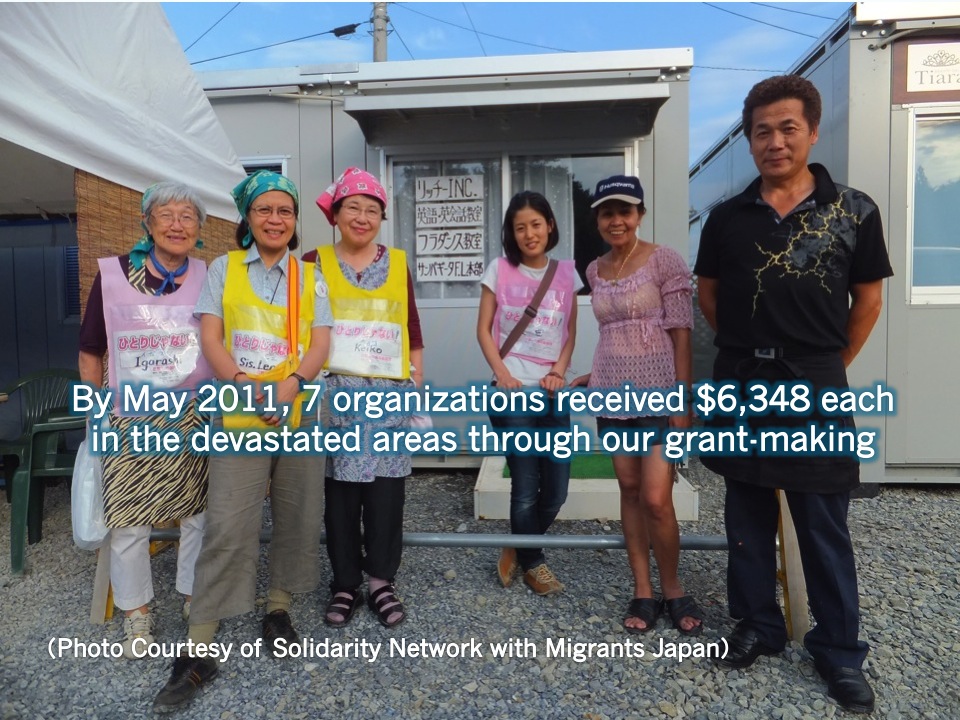
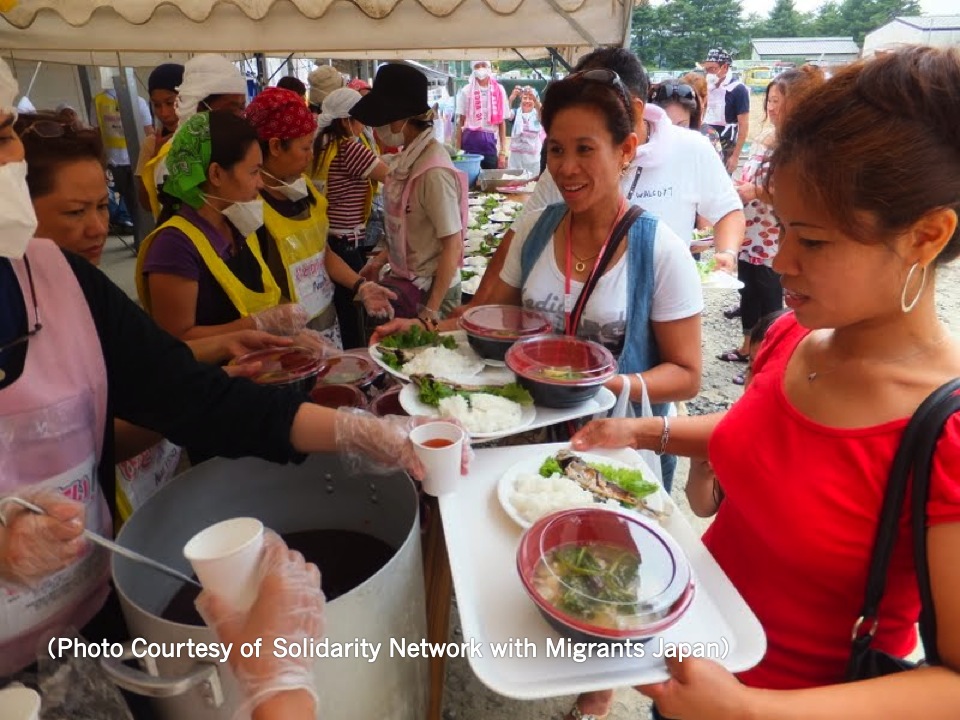
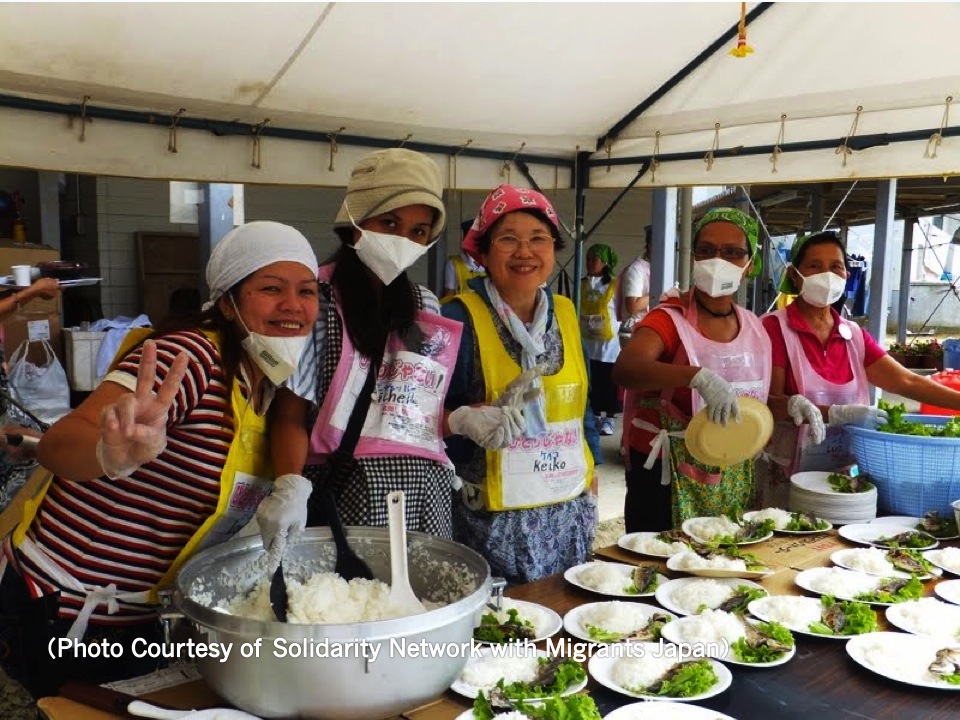
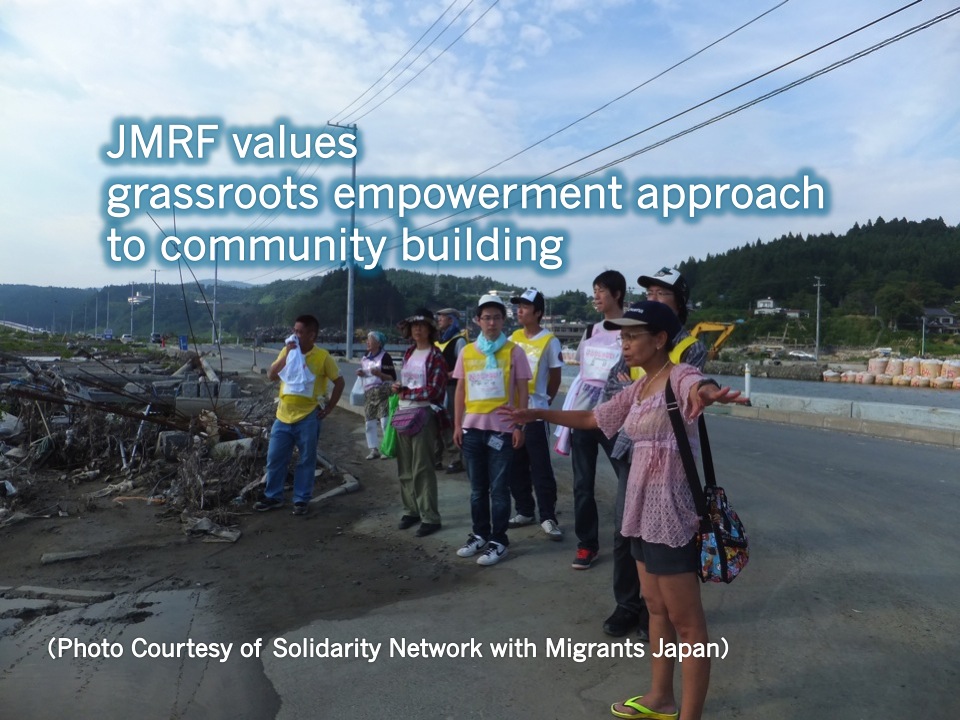
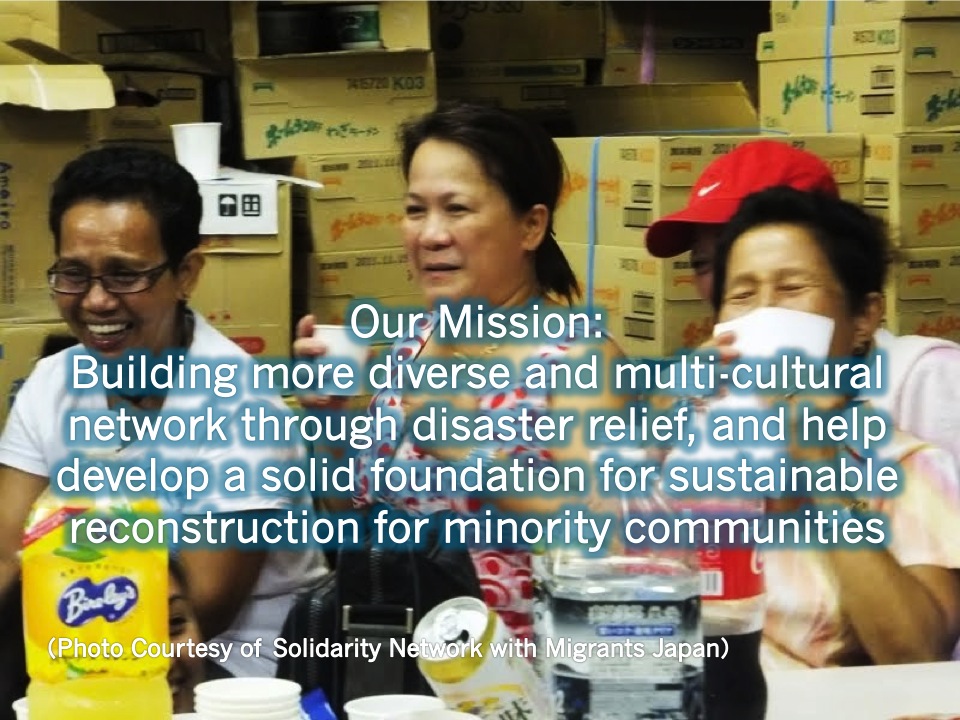
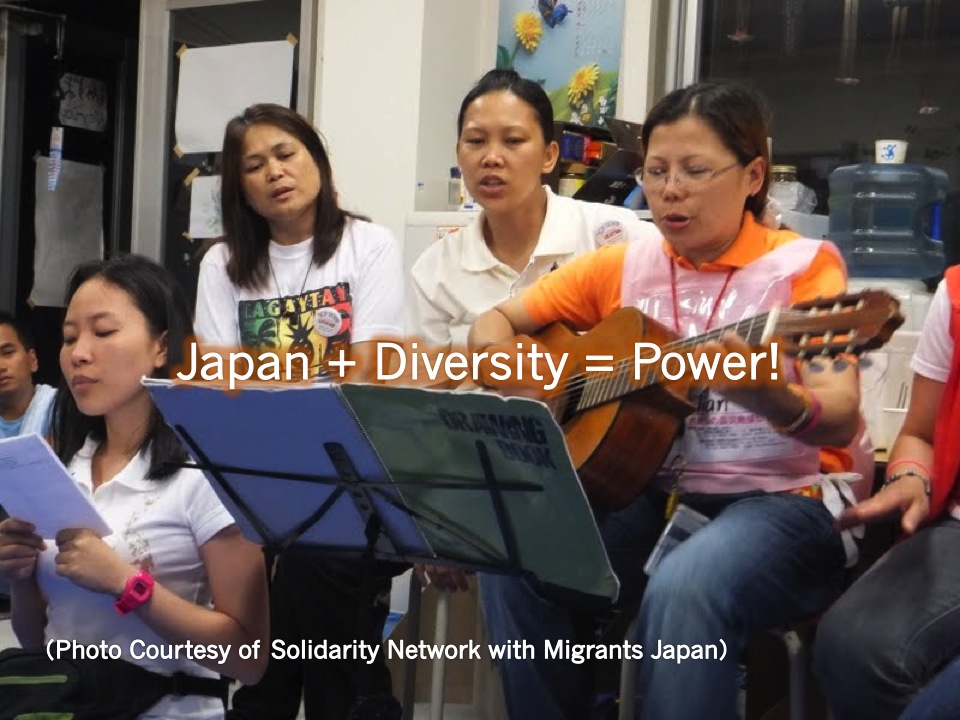
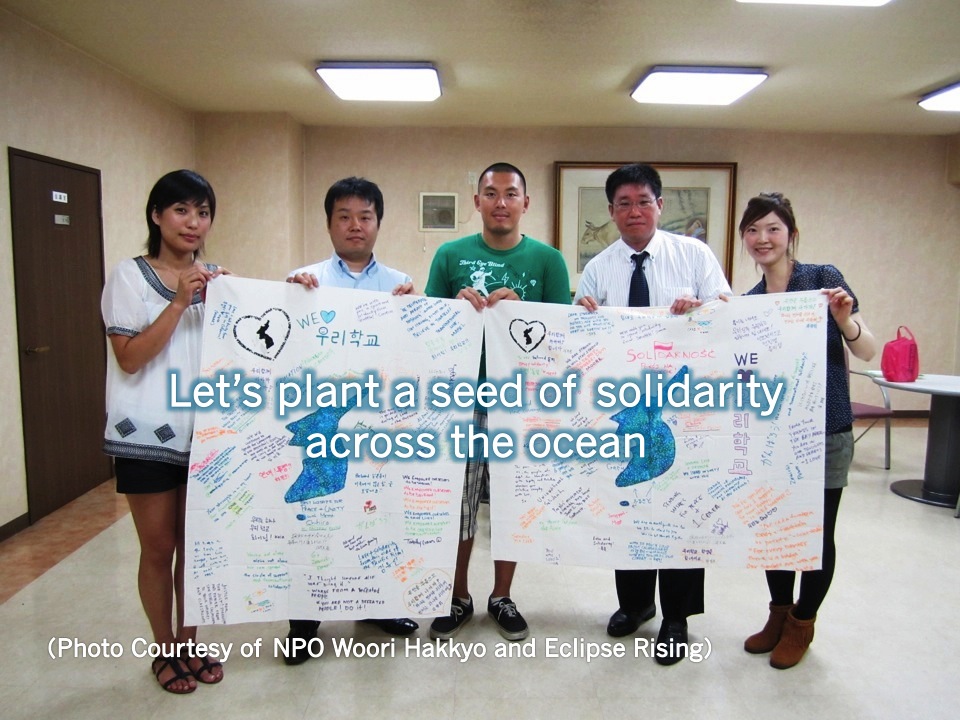
The Japan Multicultural Relief Fund (JMRF), a U.S.-based grantmaking program jointly established by Japan Pacific Resource Network (JPRN) and Eclipse Rising in March 2011 in the wake of the Great East Japan Earthquake and Tsunami, is dedicated to the empowerment and leadership by and for vulnerable communities in the post Tohoku disaster region towards and inclusive and multicultural Japanese society.

Featured

配偶者間暴力、被災地で深刻=福島で6割超-児童虐待も過去最高を記録【震災2年】

東日本大震災の被災地で、配偶者間暴力(DV)が深刻化している。狭い仮設住宅に妻たちの逃げ場はなく暴力は激化。先が見えない避難生活が続く中、夫婦関 係が悪化するなどし、福島県では2012年、警察へのDV相談件数が過去最多になった。DVは子どもの成育にも悪影響を及ぼし、児童虐待を誘発する懸念も ある。国は震災後、相談窓口を設置したが、支援者は「DV被害はこれからさらに増える」と警戒する。

Read story →

Filipino to sue TEPCO over suicide of husband in Fukushima

SOMA, Fukushima Prefecture—Vanessa Kanno started sobbing when she looked at the messages scrawled in chalk by the man who had provided her with a quiet but happy life.

“I was a father who could do nothing,” one of the messages said.

Vanessa's husband, Shigekiyo Kanno, a 54-year-old dairy farmer, wrote those words on the wall of a compost shed before hanging himself three months after the accident started at the Fukushima No. 1 nuclear plant in March 2011.

“I lived with him for more than 10 years,” Vanessa, 34, recently told The Asahi Shimbun on the farm. “I want to see him. He is not responsible, so why does he have to say, ‘I'm sorry?'”

Vanessa, who was born in the Philippines, and her two sons plan to file a lawsuit with the Tokyo District Court in March against the company she says is responsible for destroying the family's peaceful life. They will demand about 110 million yen ($1.2 million) in compensation from the nuclear plant's operator, Tokyo Electric Power Co.

Read more →

被災地の瓦礫を受け入れるか否かで揺れる大阪府
東大阪在住の詩人丁章(チョンヂャン)さんの詩


ガレキの鼓動


丁章


ガレキには声がやどっている
 救われた命よ 生きよと
 遺された命よ 目ざめよと


未来に遺された地に
 億年の汚染を
 もう再びふりまくなと
 悠久のふるさとの地で
 森の防波堤となって
 静かな永遠を眠りたいと
 汚されたおもいでの
 哀しく尊い声の響き


なのに為政者が
 分かち合いの名のもとに
 ガレキ利権で
 犠牲者を食い物にする


未来を汚すな
 子どもを救えと
 怒りの鼓動が高鳴る
 許すなという声に導かれて
 老若男女が
 為政者に迫る
 命を求める警笛を吹く


すると他愛もない押しくらまんじゅうの咎で
 権力に指差しされた旗手たちが
 乱用の獄へと連れ去られてゆく


命の鼓動がさらに高鳴る
 ガレキの怒りの声を聞けと
 命を求める警笛が響く
 おもいでをもう再び汚すなと


ガレキの声に導かれて
 老若男女はさらに迫る
 許すなという声の高まりが
 真っ暗な
 情緒のとばりを開け放ってゆく

Report Confirms Senior Citizens Vulnerable to Earthquake-Related Deaths

Of all people who died due to causes related to the Tohoku earthquakes, senior citizens represent about 89.5%, according to a report released by the Reconstruction Agency of Japan.

Earthquake-related deaths, by definition, do not include “direct” victims of the earthquakes and tsunami. Instead, the word is used to capture the broader extent of the disasters by assessing the deaths that would not have happened if the victims had not been forced to evacuate.

On May 11, 2012, the Reconstruction Agency held the first meeting to investigate into the causes such deaths. The report shows that surviving the disasters does not guarantee secure lives, particularly for senior citizens. Within 1 month from the earthquake, 865 earthquake-related deaths were reported—additional 459 within 3 months, 235 within 6 months, and further 73 within a year.

Various news media have reported that the main cause of their deaths is lack of access to adequate medical and elderly care due to evacuation and dispossession. Many people have been forced relocate to one place after another in the aftermath. This led to enormous stress, which was exacerbated by the loss of social and community support.

The government does not have a clear definition of an earthquake-related death. This is in order to allow the local municipalities to decide on their own definitions. In fact, in Futaba County, Fukushima Prefecture, the number of deaths that resulted from evacuation related to the nuclear power plant incident, as well as to the earthquakes and tsunami, outnumbered that of direct deaths.

Some municipalities in Fukushima have also recognized the undisclosed number of suicide cases related to the nuclear power plant incident as earthquake-related. The government will continue to assess, with a plan to come up with a preventive measure in August 2012.

Overall, the report on earthquake-related deaths highlight senior citizens’ need for continuous care and support—medical, material, and mental—from both the government and the local communities.

Haruki Eda
Researcher, JMRF

Sources (Japanese):

Reconstruction Agency: “The Number of Victims of Earthquake-Related Deaths in the great Eastern Japan Earthquake”

Mainichi Shimbun via Yahoo! Japan News: “Earthquake-Related Deaths: 90% Senior Citizens: 1632 People at the End of March”

Kahoku Online Network: “Earthquake-Related Deaths: Suicide Due to the Power Plant, The Government to Assess the Situation”

Yomiuri Online: “Suicide Due to Evacuation from the Power Plant Incident Recognized as Earthquake-Related”

Yomiuri Online: “342 Earthquake-Related Deaths Counted…8 Municipalities in Futaba County, Fukushima

After The Media Has Gone: Fukushima, Suicide and the Legacy of 3.11

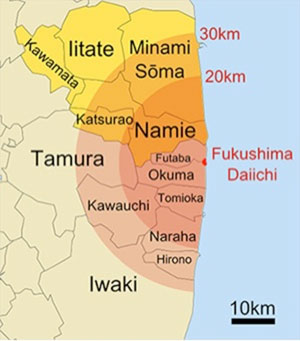
Map showing 20 kilometer evacuation zone and neighboring towns

Makiko SEGAWA

For the media, time is of the essence in a news story. The March 11, 2011 disaster attracted thousands of reporters and photographers from around the world. There was a brief deluge of Japanese and international media coverage on the first anniversary, this spring. Now the journalists have packed up and gone and by accident or design Japan's government seems to be mobilizing its agenda, aware that it is under less scrutiny.

The press pack has disappeared like a ghost since this April. The influx of foreign media has suddenly stopped, as I can attest since I worked as a translator and aid to many foreign journalists in the year up to the 3.11 anniversary in 2012. Using the keywords 'Fukushima' and 'nuclear plant' in Japanese to scour the Nikkei TELECOM 21 search engine shows 9,981 domestic news items in April 2012, just over half the 17,272 stories the previous month.

As if to take advantage of the precise timing of the media evacuation, the municipal government of Minami-soma city, Fukushima Prefecture began implementing a blueprint planned some time earlier. In the dead of night on Monday April 16th, the city lifted the no-entry regulations and changed evacuation zone designations that had stood since March 12, 2011. The decision allowed people to return to the district of Odaka and some parts of the Haramachi district.

Watanabe Ichie, a volunteer from Tokyo who witnessed the scene near the roadblock into the zone observed that: "several police vehicles with flashing red lights arrived after 23:00 on April 15th. By 0:15, all the vehicles had gone". "After that, all that remained was the light from the traffic signals." The following morning, cars moved freely inside the once-prohibited area."

Read more →

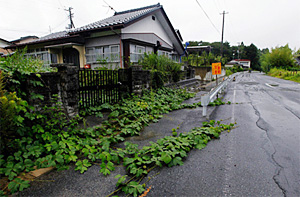
A place covered with heavily grown grasses: Fukushima

Photo courtesy japanese.china.org.cn/
Photo courtesy CNN
Photo courtesy mytown.asahi.com

In this world, there are number of places that used to be very lively and full of vitality, but became desolate no-man's land. Fukushima prefecture in Japan is not an exception. After the huge earthquake in March 11th 2011, people had to evacuate from the prefecture, which was contaminated by the radiation. This radioactive contamination was created by the Fukushima nuclear plant, which was heavily damaged by the tsunami on March 11th.

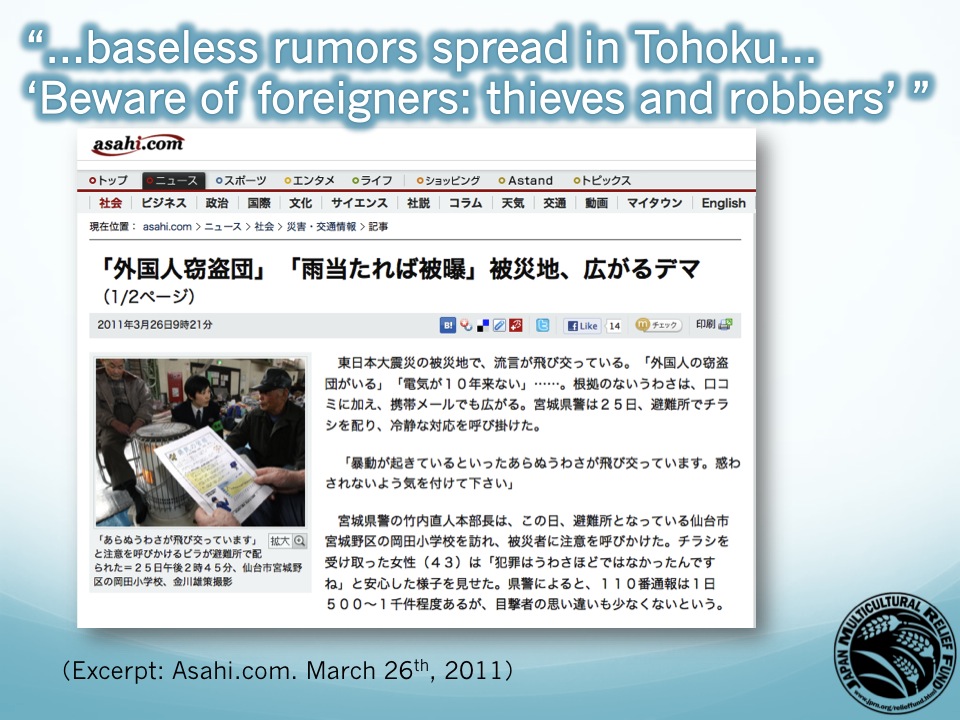
The families, workers, children….all people in the town near the nuclear plant were forced to leave their hometown. Today, there are more than 40,000 people are being forced to live at an evacuation site. More than 300,000 people are living at a temporary house. Children are being apart with their friends and enter school at the surrounding prefectures. Students from Fukushima are being discriminated at the certain school due to a suspicion that they might bring radiation. Recently, kindergartens from Fukushima were refused to enter a nursery school in Yamanashi prefecture. The increasing discrimination against innocent people in Fukushima shows no signs of stopping. Biased, rapid information provided by the mass media produced a huge prejudice toward everything related to Tohoku region, especially Fukushima.

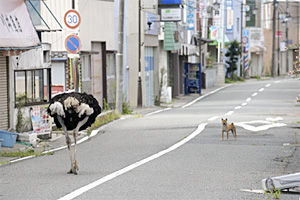
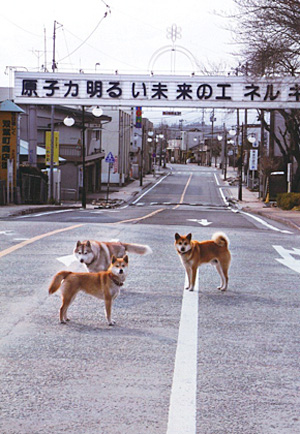
Towns in Fukushima became ghost towns. Without humans, the roads are being covered with ivy and weed. Some plants grew too large that they are reaching the height of the humans. Nobody lives here, but there are animals everywhere in the town. These animals came from the farms, zoo, and normal houses. Most of them are pet animals. Owners needed to make a harsh decision to leave their pet animals, who are the important member of the family. The scenery of an ostrich walking in a residential area seems to be very unnatural. Can people believe that the humans used to live here until the last year? Can people accept the reality that this is Japan? After a year, the passionate, favorable feeling that the people in Japan had toward the victims are decreasing. In fact, most people lost interest. The disaster had not ended yet. There are places and people that still need help.

Related articles/links:

世界のゴーストタウンを歩く:雑草が生い茂る福島の町
http://japanese.china.org.cn/life/txt/2012-03/26/content_24987309.htm

東日本大震災から1年 写真で振り返る復興と現在
http://www.cnn.co.jp/photo/7652-10000275.html

福島から避難の子ども、入園断られる 山梨の保育園
http://www.asahi.com/national/update/0302/TKY201203020761.html

全国の避難者等の数
http://www.reconstruction.go.jp/topics/20111221hinansya.pdf

4/13 San Jose, 4/14 LA Film Screening:
FUKUSHIMA Never Again

There will be a film screening of the "Fukushima, Never Again" in San Jose and LA next weekend, directed and produced by Bay Area filmmakers, Steve Zeltzer and Kazumi Torii. These events are organized by our ally, No Nukes Action Committee.

April 13th 7PM
San Jose Peace and Justice Center
48 S. 7th St., San Jose, CA

San Jose Green Party will host FNA screening as a part of their movie night program.

Refreshment and food will be served from 6:30PM. Umi Hagitani will attend and moderate post-screening discussion.

More info at:
No Nukes Action Committee website

April 14th 2-6PM
Southern California Library
6120 S. Vermont Ave, Los Angeles, CA, 90044

The Southern California Library and Yushi Yamazaki from LA will host a screening (plus speakers and discussion).

$5 donation requested (no one turned away due to lack of funds)

Please contact Yushi Yamazaki 323-401-3035 or yushiyam@usc.edu

More info at:
Facebook event page
No Nukes Action Committee website

Occupy Berkeley Sit-In Knit-In Project

Fukushima protesters wearing hand-knitted hats and scarves provided by Occupy Berkeley’s Sit-In & Knit-In Project at Tokyo Electric Power Company (TEPCO) on December 28, 2011 (Photo courtesy of Ruiko Muto)

Japan Multicultural Relief Fund Connect the Occupy Berkeley and Fukushima Women's Anti-Nuclear Movement

In December 2011, Occupy Berkeley's "Sit-In & Knit-In" project sent a box of knitted hats and scarves to women from Fukushima who protested at Tokyo Electric Power Company (TEPCO) and the Ministry of Economy and Industry in Tokyo.

The "Sit-In & Knit-In" project started as a global solidarity action with Tahrir Square in Cairo, and Wall Street in New York. In December, Maxina Ventura, an organizer of the project contacted Japan Multicultural Relief Fund (JMRF), organized the knitting, and sent it in a box to Fukushima. Women from Fukushima received the box, and wore the knitted goods at the protest site in front of TEPCO.

Ruiko Muto, a Fukushima woman who organizes Hairo Action says, "We are very happy about our solidarity with the Occupy movement in Berkeley. Even though we are sad to hear that police raided Occupy Berkeley, we know that they can never suppress your sprits, and our solidarity. Let's continue building a better world hand in hand. We are empowered by connecting with women across the ocean. Every circumstance seems to stand against us, but we know that women survive through this. Our deep compassion, our abilities to create new ideas, and our strength without resorting to violence is what will change the world."

This international solidarity gift was made possible by Hairo Action, Ruiko Muto, Hiroko Aihara, Nobuyo Goto, Occupy Berkeley, No Nukes Action Committee, Sacred Sites Peacewalk For a Nuclear Free World, and the citizens of Berkeley.

Japan Multicultural Relief Fund will continue to support this grassroots seedling in all its endeavors. Please help us support this effort! If you are interested in connecting Fukushima and Bay Area women, contact Akane at akane@jprn.org

Other News

5/28

Children build xylophone from tsunami debris to overcome PTSD

NATORI, Miyagi Prefecture--Elementary school pupils in the Yuriage district here have created a musical instrument from tsunami debris to help them overcome the horrors of the disaster that destroyed the area last year.

Norihiko Kuwayama, a 49-year-old psychiatrist, organized the project in April after learning that some of the children were showing signs of post-traumatic stress disorder (PTSD).

“Organizing thoughts by combining the scattered memories of the disaster can help prevent PTSD,” he said.

On April 26, Kuwayama led a group of 10 children from Yuriage Elementary School to the shore to search through the remaining debris.

After an hour, they gathered the collected debris in one place.

“Let’s see if it makes a sound,” a child said, showing a piece of debris.

They made noises on the pieces by striking them with a wooden plectrum. An electronic keyboard was used to see if the children had enough pieces to complete a scale."

Read more →

4/30

Japan to Extend Temporary Housing Occupancy Period

Tokyo, April 17 (Jiji Press)–Japan’s Health, Labor and Welfare Ministry said Tuesday it will allow March 2011 disaster survivors to live in temporary housing for one more year after the initially set occupancy period is over.

The ministry also decided to add water-reheating functions to baths and set up storage facilities for furniture at prefabricated houses in temporary housing compounds.

Currently, the victims of the March 11 earthquake and tsunami, mostly in northeastern Japan, are allowed to live in temporary housing for up to two years in principle.

But the ministry thinks it necessary to extend the period because many of the evacuees are unlikely find and settle in new homes any time soon.

A total of 300,000 afflicted people are now living temporarily in some 50,000 prefabricated houses and 70,000 leased private houses, both provided by local municipalities, according to the ministry.

4/13

Japan's untouchable workers

Japan's long-discriminated-against rendered as Nuclear Day Laborers in Fukushima post-meltdown cleanup, exposing Environmental Racism, Japanese style In the aftermath of the disaster at the Fukushima-Daiichi Power Plants, owned by the Tokyo Electric Power Company (TEPCO), "a systemsimilar to the one that governed Black sharecroppers in the southern United States" is starting to emerge. "They move from one plant to another seeking the most dangerous jobs...[i]t is very difficult to follow their health needs since they are not permanent employees and no one monitors their health...The workers are afraid of losing their jobs. And if they protest, the sub-contracting company will lose their job as well and will be replaced by another sub-contractor bringing in more Burakumin."

3/25

Back to School (KoreAm March Issue)

"The Koriyama school is one of two Woori Hakkyo schools located in the disaster region; the other in Tohoku was destroyed and has yet to be rebuilt.Part of the challenge in rebuilding the Tohoku school, or in decontamination efforts at the Koriyama school, is that such work is not fully funded by the national or municipal governments. The Japanese government justifies its lack of aid by citing that the Woori Hakkyo schools receive financial support from the North Korean government.

Goo told me there are about 2,000 ethnic Koreans, referred to as zainichi, living in Fukushima Prefecture. Most of them were born in Japan, and don’t care if their ancestors were born in what is now North or South Korea. They are simply proud of their Korean heritage."

3/12

BBC Documentary "Children of the Tsunami" Airs

BBC documentary "Children of the Tsunami" shares stories and perspectives of children on the tsunami. Video clips of their narrations describe their experiences of the day of the tsunami and their lives in the aftermath of the day. The children also detail their experiences on the evacuation of their homes near the Fukushima nuclear reactors. Some of their stories, along with some their parent's stories, express frustration and confusion with authorities on issues with the evacuation of children, search for missing bodies, misinformation from the government, and when they can return home.

More news →

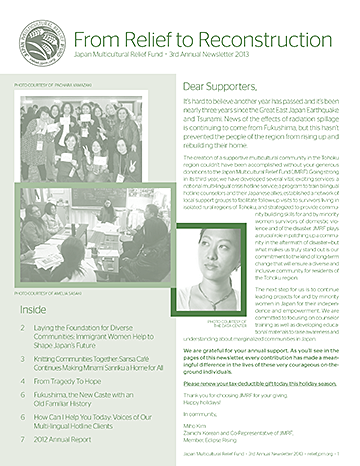
2012 Newsletter

2011 Grantee Info

Make a Donation

Donate Online

DonateNow

Donate by Check

Donation checks can be sent to:
JPRN
310 8th Street, Suite 305A, Oakland, CA 94607

Important!!

  1. Please make your check payable to JPRN! We cannot deposit checks written to Japan Multicultural Relief Fund, as it is a Fund setup within JPRN as the administrator for the Fund.
  2. Please make a note for "Japan Multicultural Relief Fund" in the "Memo" line of your check.

Your charitable contribution is tax-deductible to the fullest extent allowed by law. JPRN's Federal ID # is 94-3008480.